


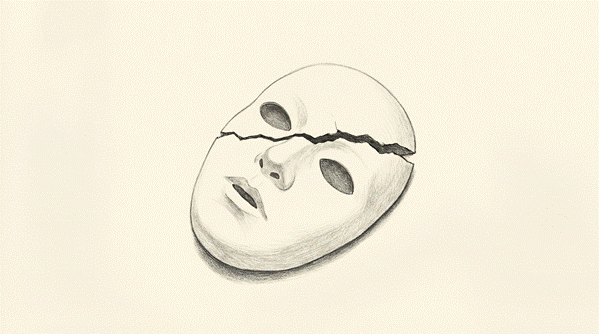
There is an old story, told in various forms across many cultures, about a village that had a word for everything except the one thing everyone could see. When the river flooded because the upstream landowner had diverted it, they called it ‘difficult weather.’ When children went hungry because the landowner took the harvest before the families could keep their share, they called it ‘a lean season.’ When the elders gathered to discuss the problem, they chose their words so carefully that by the end of the meeting, nothing had been named and nothing had been decided, and everyone went home feeling that something important had happened.
The landowner, of course, slept very well.
Reminds me of the minutes from some church board meetings, or listen to carefully worded statements from religious leaders about situations everyone in the room can plainly see. We have developed, as institutions and as individuals, a remarkable fluency in the language of not-quite-saying-it, or more bluntly, hiding-the-ball.
The prophets did not share this fluency. And neither, it turns out, did God.
The Precision of the Prophets
A striking characteristic of the prophets is their specificity. God doesn’t speak about injustice in generalities. He doesn’t offer carefully balanced statements acknowledging complexity on all sides. He names things.
Amos, an eighth-century BC shepherd turned prophet, delivered God’s message to the prosperous elites of Israel with the kind of precision that leaves no room for plausible deniability: ‘They sell the innocent for silver, and the needy for a pair of sandals. They trample on the heads of the poor as on the dust of the ground.’ (Amos 2:6-7)
A pair of sandals. Not a metaphor. A price point. God named the transaction.
Jeremiah was equally concrete with King Jehoiakim, who had commissioned a palace built on the labor of workers he never paid: ‘Woe to him who builds his palace by unrighteousness, his upper rooms by injustice, making his own people work for nothing, not paying them for their labor.’ (Jeremiah 22:13) God didn’t speak about the king’s general moral direction. He named the specific practice: unpaid labor, personal enrichment at workers’ expense.
James, writing after the resurrection, has not moderated the language at all: ‘The wages you failed to pay the workers who mowed your fields are crying out against you. The cries of the harvesters have reached the ears of the Lord Almighty.’ (James 5:4) Wage theft. God named it in the New Testament, in the same direct terms the prophets used centuries before. Apparently the intervening years did nothing to soften God’s position.
When Religious Language Becomes a Shield
Against this backdrop, Amos delivers one of the most striking passages in all of prophetic literature. God, speaking directly, tells Israel that their religious gatherings have become intolerable: ‘I hate, I despise your religious festivals; your assemblies are a stench to me... Away with the noise of your songs! I will not listen to the music of your harps.’ (Amos 5:21, 23)
Then, in the same breath: ‘But let justice roll on like a river, righteousness like a never-failing stream.’ (Amos 5:24)
That’s not God saying he prefers justice to worship. That’s God saying that worship offered by people who refuse to name and oppose injustice is not worship at all. It’s noise. The religious activity had become a way of maintaining the appearance of faithfulness while insulating the powerful from accountability.
Sound familiar? I’m not throwing stones here. I’m looking in the same window I’m asking you to look in. But the window is worth looking through.
The Theological Act of Naming
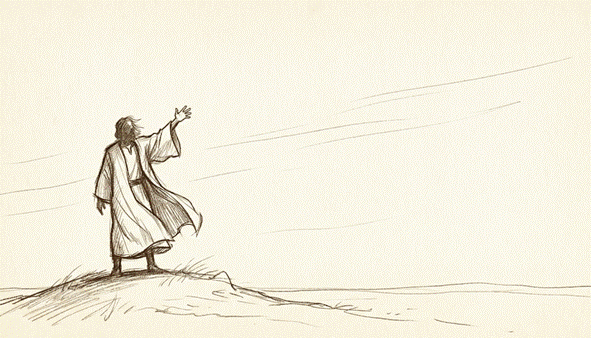
What emerges from all of this is a claim the church has largely avoided making out loud: naming injustice is a theological act. Not a political act dressed in religious clothing. Not an overreach by activists who have confused their agenda with the gospel. A form of faithfulness to a God who has been naming injustice since Genesis 4, when he told Cain plainly: ‘Your brother’s blood cries out to me from the ground.’
The God of Scripture doesn’t use euphemisms. He doesn’t describe wage theft as ‘compensation challenges.’ He doesn’t describe the exploitation of the poor as ‘systemic complexity.’ He doesn’t balance his concern for the oppressed with equal concern for the reputation of the oppressor. He names what is happening, names who is responsible, and names what he requires.
There is a form of silence that wears the costume of wisdom. It goes by names like balance, nuance, and staying in your lane. It produces statements that carefully acknowledge suffering on all sides while naming nothing, committing to nothing, and leaving the status quo completely undisturbed. The village elders would have approved.
The God of Scripture does not model this. His prophets did not model this. Jesus did not model this.
Do You Name What God Names?
We’ve now spent three articles tracing a God who hears the groan underneath the groan, who sees the people the world has rendered invisible, and who names what he sees with an exactness that leaves no one wondering what he meant. The pattern is clear. The question, as always, is what it means for those of us who carry his name.
We have our own version of the village’s careful language, and it shows up in places we don’t always notice.
It shows up when a political leader uses language that dehumanizes an entire ethnic group and we describe it as ‘divisive rhetoric’ rather than what Amos would have called it. It shows up when a church quietly reassigns a minister credibly accused of abuse and we call it ‘ministry transition.’ It shows up when a policy strips nutrition assistance from hundreds of thousands of children and the most our institutions can manage is a statement expressing ‘deep concern’ or a request for a simple canned food donation to the food pantry.
It shows up, closer to home, when someone at work is being treated unfairly and we tell ourselves we don’t have enough information to say anything. When a neighbor is being pushed out of their housing and we frame it to ourselves as ‘complicated.’ When we watch something happen in our own congregation that we know isn’t right, and we dismiss it since ‘nobody’s perfect or we choose the word ‘unfortunate’ because it lets us acknowledge the thing without obligating us to do anything about it.
Naming things costs something. It risks relationships, comfort, and the social goodwill we’ve built up by being the kind of person who doesn’t rock the boat. The prophets knew this. Amos wasn’t from the professional class. He was a shepherd. He had nothing to lose by keeping his mouth shut, and everything to lose by opening it. He opened it anyway, because the God he served had already named the thing and expected his people to do the same.
The question isn’t whether we have the right words. We do. The question is whether we’re willing to use them.
Naming is where it gets specific. But as we’ll see next, it is never where God stops.
There is a form of silence that wears the costume of wisdom. It goes by names like balance, nuance, and staying in your lane. The prophets had a different name for it.
For Further Reflection Think about something you’ve witnessed recently, in your community, your congregation, or the news, that you know was wrong but described to yourself in careful, softened language. What would it look like to call it what it actually is? And who, honestly, were you protecting by not?
Next is Part 4, “God Didn’t Issue a Statement. He Moved.”
Wow, Harvey! You said the thing! I am consistently inspired and motivated in my own walk by your writing thank you!
Well said, Harvey. You speak my mind but from a different perspective than I am used to. You give me much to think about.