


Part 2 of 4 in a series on what it actually looks like to live out justice. Catch up with Part 1, “Let’s Get Messy…” first.
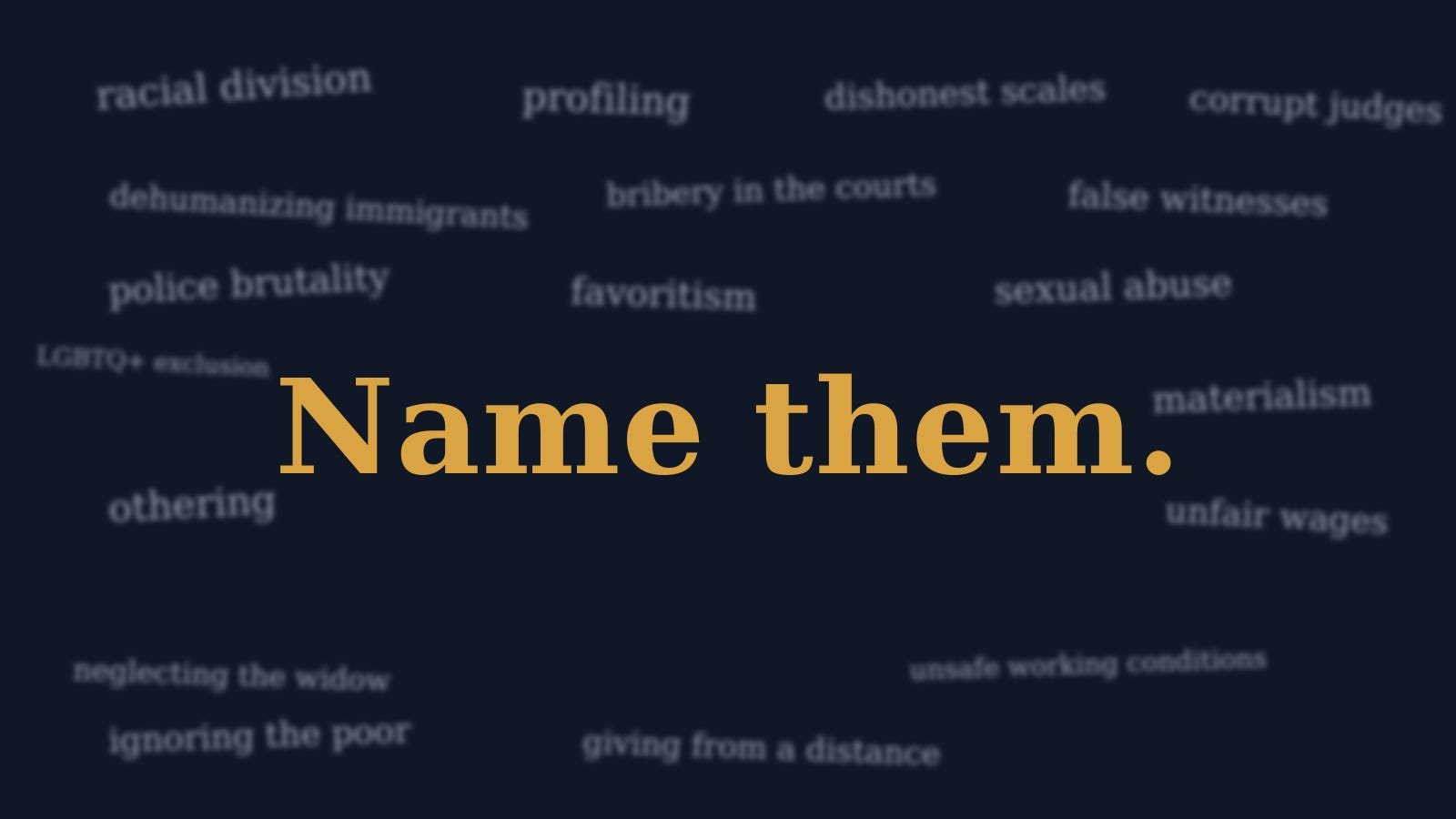
There’s a familiar, general prayer for “peace in our nation” that churches across the country pray every week, the same week a specific person got shot by a specific law enforcement officer or a specific family got separated at a specific border crossing.
Although a specific vote happened on a specific bill stripping hungry children of nutritional support, we recite a general prayer to “help the needy among us” over and over, week after week.
And when a specific child was orphaned from a specific bomb dropped on their specific town, the general “prayer for the Middle East” checks the box of concern without acknowledging the specific hurt, suffering, or tears of the real children in specific communities.
As a result, nobody in the room feels implicated, and everybody nods in reverence because the prayer covers the whole week without revealing anything specific or uncomfortable that actually happened in it.
And how about the sermon on “brokenness in the world” or “loving your neighbor”? The generalness of it makes it a very safe sermon to give. You can preach it in any decade to any congregation and never once risk identifying a name or offending anyone.
I’ve already written about churches and institutions doing this from a podium, choosing careful language so nobody has to be named or feel challenged by the sermon. This article, however, is closer to home. It’s about my own mouth and your own mouth. The prayers each of us prays, the conversations we have at dinner tables, the comments we leave, the way we talk about hard things with people we love. Because long before it’s an institutional church problem, vagueness was a personal habit.
Say “pray for the hurting” and you sound compassionate without picking a side, without risking the friendship with the person across the table who might disagree, without admitting you have no idea what you’d actually do about the thing you just referred to.
Say “there’s a lot going on in the world right now” and you’ve acknowledged something without committing to anything. Nobody does this to be dishonest. But it is self-protective by default. It’s the verbal equivalent of keeping your hands in your pockets.
Naming something specifically costs more because when you pray for a specific person by name, you’ve exposed what you believe about that situation and made yourself accountable to ask about it again next week. You might find out the person across the table or down the pew disagrees with you about what happened, and now you have to deal with that instead of retreating to the comfortable fog where you both just care about the general state of “brokenness.” Naming specifically buys something vagueness never can because it makes suffering real and prompts us more forcefully to act.
Look at Scripture and you’ll find specifics. When David needed to be confronted, Nathan didn’t walk in with a general sermon on integrity. He told a story about a rich man who stole a poor man’s only lamb, let David get righteously angry at the story, and then said the four words that brought it home to the man sitting on the throne: “You are the man” (2 Samuel 12:7). A specific accusation, aimed at a specific person, about a specific thing he’d done.

Jesus does something similar with the woman at the well (John 4). He doesn’t open with a lecture on sin in the abstract. He tells her, plainly, about the five husbands and the man she’s currently living with who isn’t one of them. As uncomfortable as that is to read, imagine the awkwardness of being called out by Jesus (or anyone for that matter) that specifically in person. For what it’s worth, that woman did end up running back into town saying that Jesus had told her everything about her life. And vague, general, non-specific compassion wouldn’t have produced that reaction in anyone.
In an ordinary week, the gap looks like “pray for the hurting” versus praying by name for the specific coworker who just lost custody of her kids. Or “there’s a lot going on in the world” versus naming, out loud, at dinner, the actual law that passed stripping nutritional benefits from needy youth or the actual shooting that happened three towns over. A sermon that mentions general injustices or the broad conflict in the Middle East in one sentence and moves on versus one that names the eviction rate in your own zip code or identifies the specific countries, towns and neighborhoods bombed.
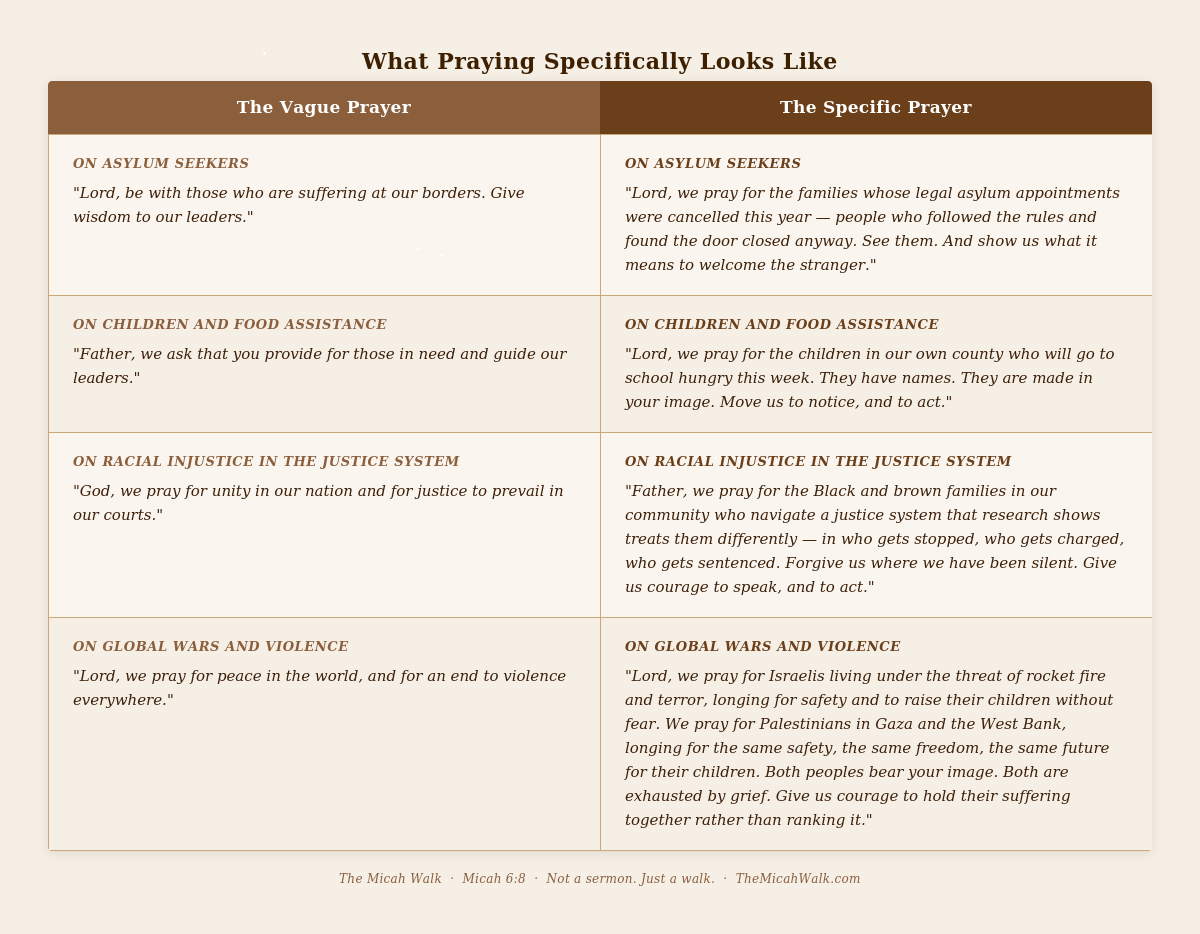
These examples only require more courage than a normal conversation. They require us to stop reaching for the word or phrase that lets everyone off the hook.
So think back to the last time you prayed about something or brought something up at dinner. How about the public prayer or sermon at church that references only a vague version on purpose because naming risks looking political by some. Vague language isn’t neutral. It feels neutral, but in fact it is a choice made quietly enough that it can convince us no choice was made.
For further reflection:
What injustices or needs can you start praying for or naming more specifically in your personal life?
How can you extend that practice of praying and naming more specifically to your church community?
Next week: naming the problem is only step two. Step three is whether the naming specifically shapes how you live. That’s “Let’s Get Busy...”