


Part 4 of 4 in a series on what it actually looks like to live out justice, not just believe in it. Catch up on Let's Get Messy, Let's Get Specific, and Let's Get Busy if you're just joining.
I met a woman who spent eleven years working with survivors of domestic violence. Eleven years of intake calls, protective orders, court dates that get rescheduled three times, and clients who sometimes go back anyway. When I asked her how she was kept up with it all, she looked at me for a second too long and said, “Honestly? I don’t remember the last time I felt anything besides tired.”
That’s a person who is worn down by exactly the kind of work we’ve spent the last three weeks asking you to do. Get close. Name it specifically. Do something about it consistently. Doing all that costs something and can easily lead to exhaustion and discouragement.
Somewhere in the mid-90s a song about letting loose on the dance floor became the kind of inescapable hit you couldn’t avoid at a wedding or a cookout, or in a car with the windows down. “Getting jiggy wit it" in that song meant losing yourself in the moment—no self-consciousness and no holding back. I’m borrowing the phrase for something a little more serious than a dance floor, but I don’t think the original meaning is as far off as it sounds. Losing yourself in a moment of pure, uncalculated joy turns out to be what Scripture has described before, just centuries earlier and with considerably higher stakes.

Now, picture David: the shepherd boy who grew up to be Israel’s greatest king, giant-slayer turned monarch, a man with an entire nation watching his every move. The actual scene in 2 Samuel 6 describes the ark of the covenant finally coming home, and King David is dancing in front of it with everything he’s got. He’s leaping and spinning in a linen ephod that left considerably less to the imagination than a king’s robes usually do. His wife Michal watches from a window and despises him for it. It’s too undignified, she thinks. Too much. And beneath the office.
David’s answer to his wife a few verses later amounts to: I’ll celebrate before the Lord, and I’ll get even more undignified than this if I feel like it.
That’s not a man taking a break from his calling, but a man whose joy was part of the calling.
Joy Is Not the Same Thing as Happiness
We need to be precise about this, since the two terms often get used interchangeably.
Happiness reacts to circumstance. Something good happens and you feel it, and there’s nothing wrong with that. But it rises and falls with the news cycle, the Supreme Court rulings, the election results, the diagnosis, and our specific experiences each day. That means happiness is completely unavailable in those darker, more challenging times that this series of articles has been referring to: the jail cell, the shelter, the courtroom, the family that’s still waiting on an asylum hearing three years in.
Joy, however, runs the other direction. Instead of being produced by circumstances, it’s asserted against them. That’s what explains Paul and Silas singing hymns at midnight with their feet still in stocks (Acts 16:25). Their joyful singing didn’t mean that jail was easy, safe or comfortable. It was a declaration that their conditions would not get the final word.
That’s what makes joy dangerous in the best sense. Happiness says things are good while joy says things are not good and I’m still going to sing. It shows perspective and ultimate confidence in God. And that is a far more threatening statement to anyone counting on despair to win.
A Pattern That Runs the Whole Length of Scripture
David isn’t alone in this. Miriam grabs a tambourine on the far shore of the Red Sea and starts dancing before Pharaoh’s army has even finished washing up on the beach, before anyone knows for certain the threat is really over (Exodus 15:20). Her dancing is part of how she processes what just happened instead of being a reward she claims once everything settles down.
Generations later, the exiles laying the new temple foundation in Ezra 3 shout for joy and weep at the same time, so loudly that onlookers couldn’t tell the difference between the two sounds. Joy and grief, coming out of the same voices over the same rubble.
And then there’s Paul and Silas, already mentioned above, beaten and imprisoned for doing something entirely faithful. They chose to sing rather than plot revenge or sink into despair. An earthquake eventually springs the doors open, but the singing came first while the chains were still on.
None of these people waited for the win to celebrate. The celebration showed up in the middle of the mess and the stress, and sometimes because of it.
Joy Has Always Scared the People in Charge
Enslaved people in the American South sang spirituals that carried two messages at once: genuine hope in God and coded instructions for escape, sometimes in the very same lyric. Plantation owners who overheard “Wade in the Water” or “Steal Away” mostly heard religious sentiment. In reality, though, they were hearing songs of resistance from people who longed to escape.
Freedom Riders and marchers in the 1960s sang on buses headed toward violence they knew was waiting for them. Nobody expected that singing would make the batons and the dogs disappear, but it kept people upright long enough to keep marching. Sheriffs who wanted the crowds to break and scatter got something they hadn’t planned for: people singing louder as things got worse.
And Juneteenth exists precisely because celebration and unfinished business can share the same holiday. Enslaved people in Texas got the news of freedom two and a half years after the Emancipation Proclamation was declared. Even with full justice still being a long way off, they celebrated the news the day it arrived and just kept fighting for everything the news hadn’t yet delivered.
None of that was a distraction from the work. It was what kept the work alive.
Skipping the Party Is Not the Serious Choice
It’s tempting to think that premature joy is somehow frivolous or unearned. Or that celebrating a small win is disrespectful to the size of the problem still in front of you.
That belief may feel correct, but it can produce burnout. The exhausted and discouraged woman with the domestic violence hotline referred to above was losing her capacity to help despite not losing her compassion. After all, eleven years of grinding without moments of shared celebration will do that to anyone.
Micah 6:8 asks you to walk humbly with your God, not grimly.
What This Actually Looks Like
A few practices worth trying. None of them are complicated.
Say the win out loud in front of other people before you move to the next fight. An actual acknowledgment that this thing got better because people showed up for it. A small incremental win perhaps, but still a win.
Build celebration into the work itself instead of treating it as a separate reward. Share a meal after the shelter shift or include music at the fundraiser instead of just another slideshow. Let the work have a party attached to it, not just a debrief.
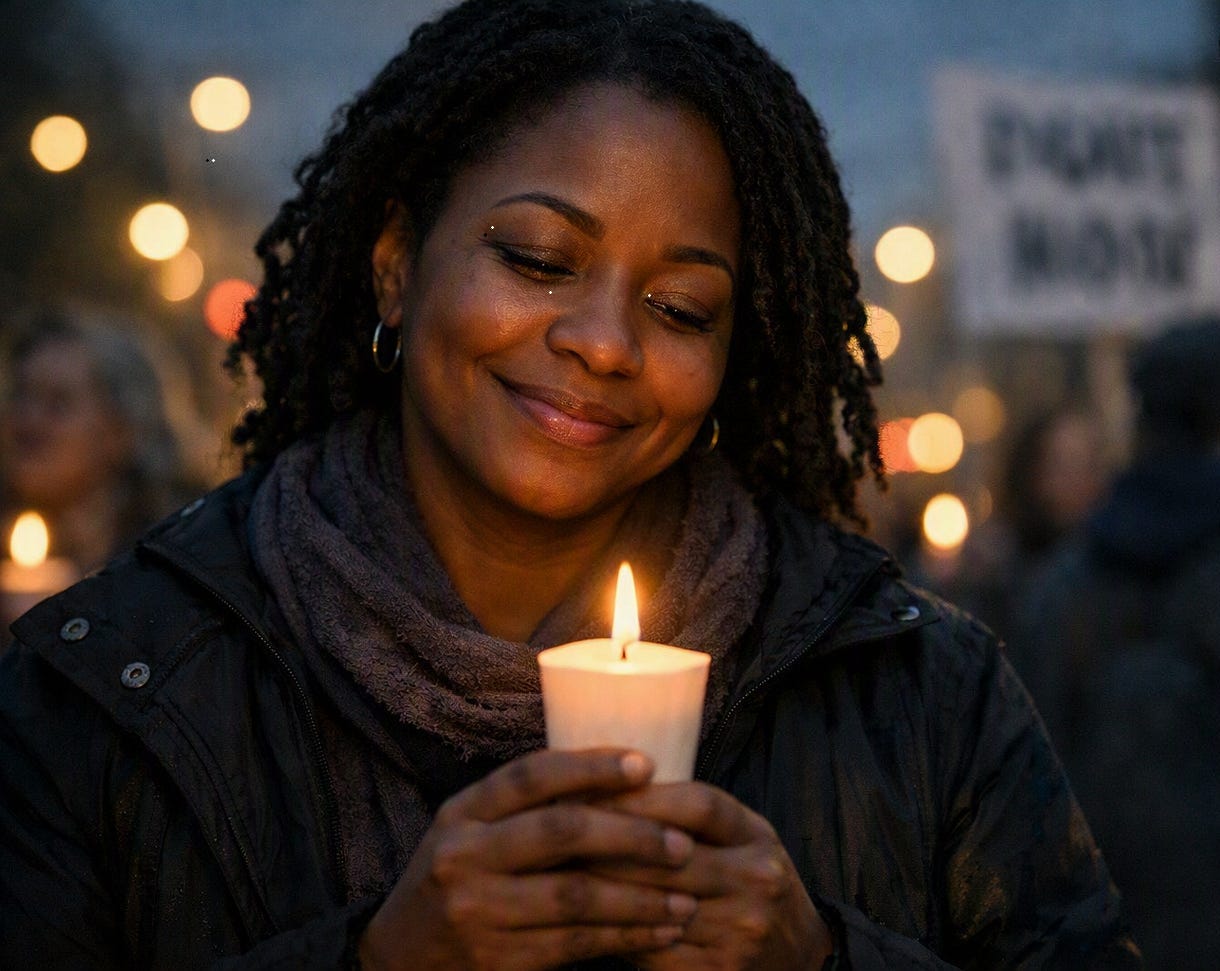
Let joy that belongs to communities who’ve been through the fire be visible in public. Celebrations of black heritage, recognition of disabled rights achievements, and successful resettlements of refugees. These can be their own kind of witness instead of being something that needs to wait for permission.
David danced until his own wife was embarrassed for him, and Scripture doesn’t record him apologizing for it. Maybe that’s the whole point of ending here. Three weeks ago we started with getting close to people’s pain, and now we end with getting loose enough to celebrate their progress, sometimes loudly, sometimes a little undignified, right in the middle of a fight that isn’t over yet.
Go dance about something this week. Not instead of the work but because of it.
For Further Reflection
Four themes, four weeks: proximity, honesty, consistency, and joy. Which one are you actually short on right now? Which one, if you’re honest, you’ve been skipping.
That’s the whole walk for now: get messy, get specific, get busy, and get jiggy. Not as four separate assignments but one life lived a little closer, a little more honestly, a little more actively, and with a lot more joy than we usually give ourselves permission for.