



There is a legal concept I work with regularly called the duty of care. The core idea is straightforward: the more knowledge or responsibility you have in a situation, the higher the standard you are held to. A bystander who witnesses an accident is treated differently than a trained paramedic who witnesses the same one. Someone who could not have known is treated differently than someone who knew and chose not to act.
The legal world did not invent this principle. It borrowed it, whether it knows it or not, from a much older source. The prophets understood it. God, apparently, has always understood it. And it is why the sharpest words in all of Scripture were aimed not at the nations who had never heard of the God of Israel, but at the people who carried his name, gathered in his temple, and sang his songs while the poor went unseen and the widow went unheard.
The walk, it turns out, does not grade on a curve.
— ✦ —
The Direction of the Sharpest Words
If you read the prophets expecting the harshest indictments to fall on Israel’s pagan neighbors—on Babylon, Assyria, the empires of the ancient world—you will be surprised.
Amos delivered his message to Israel. Isaiah’s devastating critique in chapter 1—the one where God says he hides his eyes during their prayers, that he has had enough of their offerings, that their assemblies are a burden—was addressed to Judah. Micah’s indictment of leaders who ‘hate good and love evil,’ who ‘tear the skin from my people and the flesh from their bones,’ was aimed squarely at the religious and political leadership of God’s own covenant community. (Micah 3:1-3)
Jesus reserved his sharpest confrontations not for Rome, but for the Pharisees and teachers of the law: ‘Woe to you... because you give God a tenth of your mint, rue and all other kinds of garden herbs, but you neglect justice and the love of God.’ (Luke 11:42)
Woe is not mild disappointment. In the Hebrew prophetic tradition, it is lament fused with judgment. And Jesus aimed it at religious leaders who had reduced faithfulness to meticulous rule-keeping while the poor, the widow, and the foreigner went unseen and unnamed.
Why the Higher Standard Makes Theological Sense
It follows directly from the logic of covenant and calling.
To be called is to be entrusted. To know the character of God—his hearing, his sight, his refusal to name injustice vaguely, his movement toward the oppressed—and to represent him in the world is to carry a weight of responsibility that comes with the knowledge. Jeremiah makes this explicit when he contrasts the unjust King Jehoiakim with his father Josiah, who ‘defended the cause of the poor and needy.’ God’s commentary: ‘Is that not what it means to know me?’ (Jeremiah 22:16)
Knowing God, in the Hebrew sense, is not primarily an intellectual or even experiential category. It is a relational and ethical one. You demonstrate that you know God by doing what God does.
Which means that the church’s silence on injustice is not, in the end, a political failure or a cultural accommodation. It is a failure of faithfulness. A failure to know, in the deep biblical sense, the God whose name is being carried.
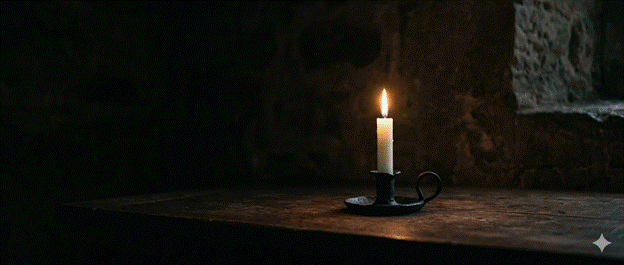
The Open Door of Micah 6:8
This is where the series began, really. Micah 6:8 is the axis on which The Micah Walk turns.
‘He has shown you, O mortal, what is good. And what does the Lord require of you? To act justly and to love mercy and to walk humbly with your God.’
Notice what Micah does not say. He does not say: to perform the correct rituals, to hold the correct positions, to remain neutral on contested social questions, to prioritize institutional unity over prophetic witness. He says: act justly. Love mercy—hesed, the covenant faithfulness that refuses to abandon the vulnerable. Walk humbly with your God.
The walking image matters. It is not a sprint and it is not a monument. It is a steady, daily, forward movement alongside a God who is himself always moving toward the cries he hears, the suffering he sees, the injustice he will not stop naming.
Over this series we have traced that God across seven weeks of Scripture, from Genesis to Revelation. We heard the groan underneath the groan in Exodus (Article 1). We watched him see the people the world had rendered invisible (Article 2), the way he saw Hagar at a spring where no one else looked. We watched him name exploitation by its exact price point (Article 3)—a pair of sandals, unpaid labor, wages crying out from the ground. We watched him move (Article 4), three times in two verses, through prophets and servants and his own incarnate presence in the world. We sat with the cost of the silence his people sometimes practice in his name (Article 5). We looked at the compass the imago Dei actually is (Article 6).
And now we arrive at the final question. Not whether this is who God is. That has been answered.
What Will You Do With What You Know?
The duty of care, in law, is triggered the moment you have enough knowledge to act. You do not need certainty or a complete picture. You need enough to know that something is required of you.
By that measure, everyone who has read this series to Article 7 has a duty of care problem.
You know that God hears the groan underneath the groan — the accumulated cry of people crushed by systems designed to keep them there. You know that he sees the people power has rendered invisible, and that his sight is a form of advocacy. You know that he names exploitation by its actual name rather than dressing it in careful institutional language. You know that he moves, without exception, from attentiveness into action. You know that the silence his people practice in his name is a theological crisis — not primarily for the people who have left, but for the church that drove them out. You know that the image you bear is not a trophy but a compass, and that it only points in one direction.
That is not a small amount of knowledge. And knowledge, as Jeremiah’s God made unmistakably clear, creates obligation.
Maya Angelou put it simply enough to cross-stitch on a pillow and profound enough to actually mean something: "Do the best you can until you know better. Then when you know better, do better." Seven articles ago, you may not have known what you know now. That was then. This is now.
What that obligation looks like will differ for every person reading this. It might look like the conversation you have been avoiding with your church’s leadership about why justice rarely, if ever, makes it to the sermons, congregational prayers, or activities agenda. It might look like immigrant family you help settle into their new community because that’s a hard difficult for anyone to make. It might look like finally going inside the food bank to volunteer with distributing food to patrons instead of dropping bags at the door. It might look like learning the name of the person outside the grocery store you have been walking past for months.
None of those require a platform, a theology degree, or a complete theory of social change. They require the willingness to be held to the standard that knowledge creates. To stop grading your own walk on a curve.
— ✦ —
Micah 6:8 is not a slogan. It is a life direction. Not a sermon—just a walk. A walk that hears, sees, names, and moves. That holds those who carry God’s name to the same standard he holds them to, without flinching and without cruelty.
The question is not whether this is who God is. That has been answered. The question is whether we will walk the same way he walks.
The door is open. The road is long. And the God who does not turn away from the suffering of the oppressed is already walking it.
You demonstrate that you know God by doing what God does. That is not a suggestion from the prophets. It is their definition of faithfulness.
For Further Reflection Seven articles. One consistent portrait of a God who hears, sees, names, and moves — and who holds those who know him to the same standard. You have read this far. You know what you know. The duty of care has been triggered. What is the one specific, concrete, local thing you will do differently because of it? Not someday. This week.
you words have healing effect
From an old friend, thank you for sharing your wisdom and exposing your heart so we can also understand better. The quote from Maya Angelou has stuck with me. When you see better then do better.
I appreciate you and your writing.
David Payne
Missoula, MT