


In a national survey released in 2024, Barna and Gloo found that 42 % of American adults say they have deconstructed the faith from their youth. Among people who still call themselves Christians, it was 37%.
That 37% is more than one in three.
The person deconstructing isn’t some stranger with a podcast and a ring light. It’s the church usher or song leader. It’s your daughter, your brother, or even the person sharing your pillow. Or maybe it’s you. If it is you, and you haven’t told a soul yet, this article series was written for you and not about you.
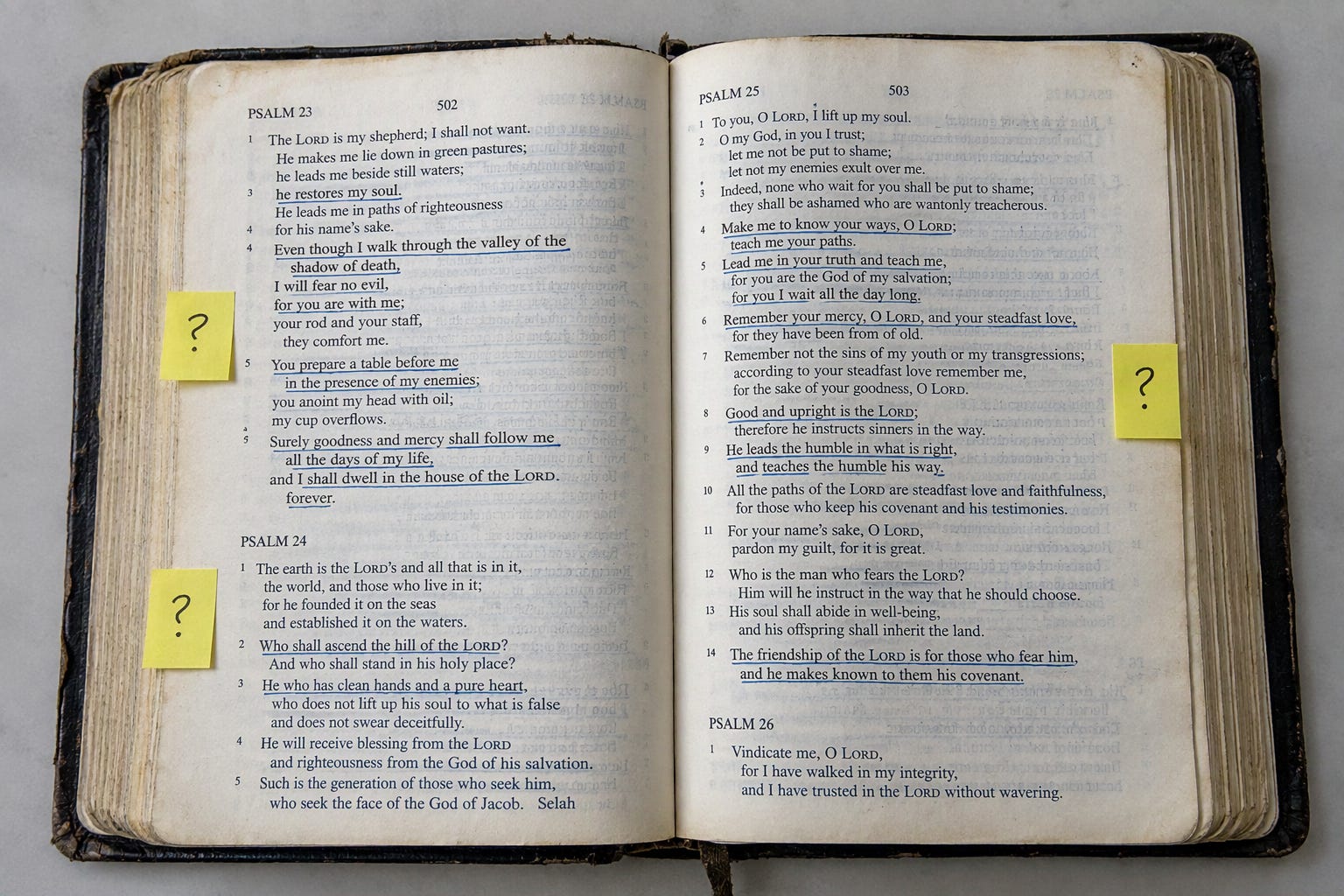
What deconstruction is
“Deconstruction” is a word that scares or worries some church folk. Others wear it like a merit badge. Let me try a plainer definition.
Deconstruction is taking your faith off the shelf, the faith you inherited or the faith you were taught or picked up along the way, and asking an honest question about each piece of it: did this come from Jesus, or did it come from somewhere else like your denomination, your culture, your politics, your opinionated youth minister, or even someone’s fear?
It is an inventory, not an exit
Deconstruction usually doesn’t start with a theology book. It starts with a person, a headline, or a funeral. Hell, and who ends up there. The child who wasn’t healed. How to read Genesis. Purity culture and the shame it left behind. A son or daughter who comes out. What women are allowed to do at church. Faith fused to a political party or flag. Exactly which neighbors we’re called to actively and visibly love. The church’s long, comfortable silence on race or social justice.
Something cracks, and you start asking what else you never thought to ask.
The Bible is full of people who had to rethink what they’d been taught about God, and Jesus kept making them do it.
Six times in Matthew 5 Jesus says some version of “You have heard that it was said….but I say to you.” He told religious experts of his day that the Sabbath was made for people and people weren’t made for the Sabbath (Mark 2:27). Most of his arguments were with the best-taught, most devout people in town, and most of those arguments challenged them to think differently about what they’d been taught.
The Apostle Peter grew up knowing exactly what his Jewish faith said was clean and what wasn’t. Then God handed him a rooftop vision and said, “Do not call anything impure that God has made clean” (Acts 10:15). Not long after, Peter walked into the house of a Gentile soldier named Cornelius, a house he’d been taught his whole life never to enter, and said out loud, “But God has shown me that I should not call anyone impure or unclean” (Acts 10:28). That’s a lifetime of religious instruction deconstructed in about a day.
And the Bereans in Acts 17:11 got praised for checking even the Apostle Paul’s preaching against the Scriptures. They fact-checked Paul and got a gold star for it.
Let’s be clear. Rethinking what you were taught about God is not a sin, and it’s not spiritual weakness. Neither is doubt, as long as it keeps asking. Doubt that keeps seeking is part of faithfulness. It’s faithful exploration and exactly what Jesus kept asking people to do.
Faith that can’t survive a question was never faith. It was furniture.
Six myths worth retiring
Four of these myths belong mostly to the people who worry about deconstruction. The last two belong to the people doing it. I admit that I’ve believed at least one from each side.
Deconstruction Myth 1: Deconstruction means leaving the faith. Some people do leave. Barna found that among ex-Christians who deconstructed, about two in five moved toward atheism or agnosticism, and I won’t pretend that isn’t real or painful. But remember that for the 37% of Christians that admitted to having deconstructed their own faith, most still call themselves Christians, and plenty of them were in church last Sunday. Asking where a belief came from is a long way from walking away from God.
Deconstruction Myth 2: It’s a trend somebody started online. The word may be new, but the practice is ancient. Martin Luther nailed 95 questions to a church door in 1517, and we named a whole movement after him. Every reformation in church history started as somebody’s deconstruction.
Deconstruction Myth 3: People deconstruct because they want permission to sin. Look back at that list of where deconstruction usually starts. Most of it is moral objection: abuse covered up, racism blessed or ignored from the pulpit, the vulnerable shoved aside. A lot of people aren’t struggling because the church asked too much of them. They’re struggling because it asked too little of itself. Are there people who use deconstruction as an exit ramp to do whatever they want? Sure. There are also people who use church attendance as a cover for the same thing. Just saying.
Deconstruction Myth 4: Doubt means your faith is weak. In a 2017 study, Barna found that about two-thirds of Americans who are or have been Christians have gone through a season of questioning what they believe, and most of the devout ones said the doubt left their faith stronger (me included, but more on that in Part 3 of this series). Thomas doubted out loud and got a personal visit from the risen Jesus. Strong faith is what keeps you at the table while you ask the hard questions.
Deconstruction Myth 5: Everything I was taught was wrong. Some of it may have been. But some of it held you up in the worst year of your life. The grandmother who taught you to pray deserves a fair hearing before you file her faith under “mistakes.” You can outgrow a teacher without despising the lesson.
Deconstruction Myth 6: The goal is to tear it all down. Deconstruction is a season, not a permanent address. Doubt is a place to visit and a terrible place to live. The point was always to end up with a faith you can actually stand on, with even greater confidence and freedom.
You have permission
You don’t need to feel guilty if you have questions or doubts about faith.
Your doubts are real, and so is your conditioning. Most of us absorbed our faith from people we loved and trusted, without the curiosity or maturity yet to ask where any of it came from, and plenty of us grew up in churches that quietly rewarded the people who never asked. None of that makes you a bad Christian. It makes you a person who was taught things, which is every person.
If your faith is going to be yours, and not your parents’ or your pastor’s or your denomination’s, some kind of deconstruction is going to happen. It’s expected. Jesus himself invited it, over and over, usually to the people who were most sure they already had God figured out.
So set the guilt down. God isn’t threatened by your questions. He’s been answering harder ones since the beginning—just ask Abraham, Rebekah, Moses, Gideon, Jeremiah, Elijah, Job, Habakkuk, the Psalmists, Mary the mother of Jesus, John the Baptist, and the Twelve.
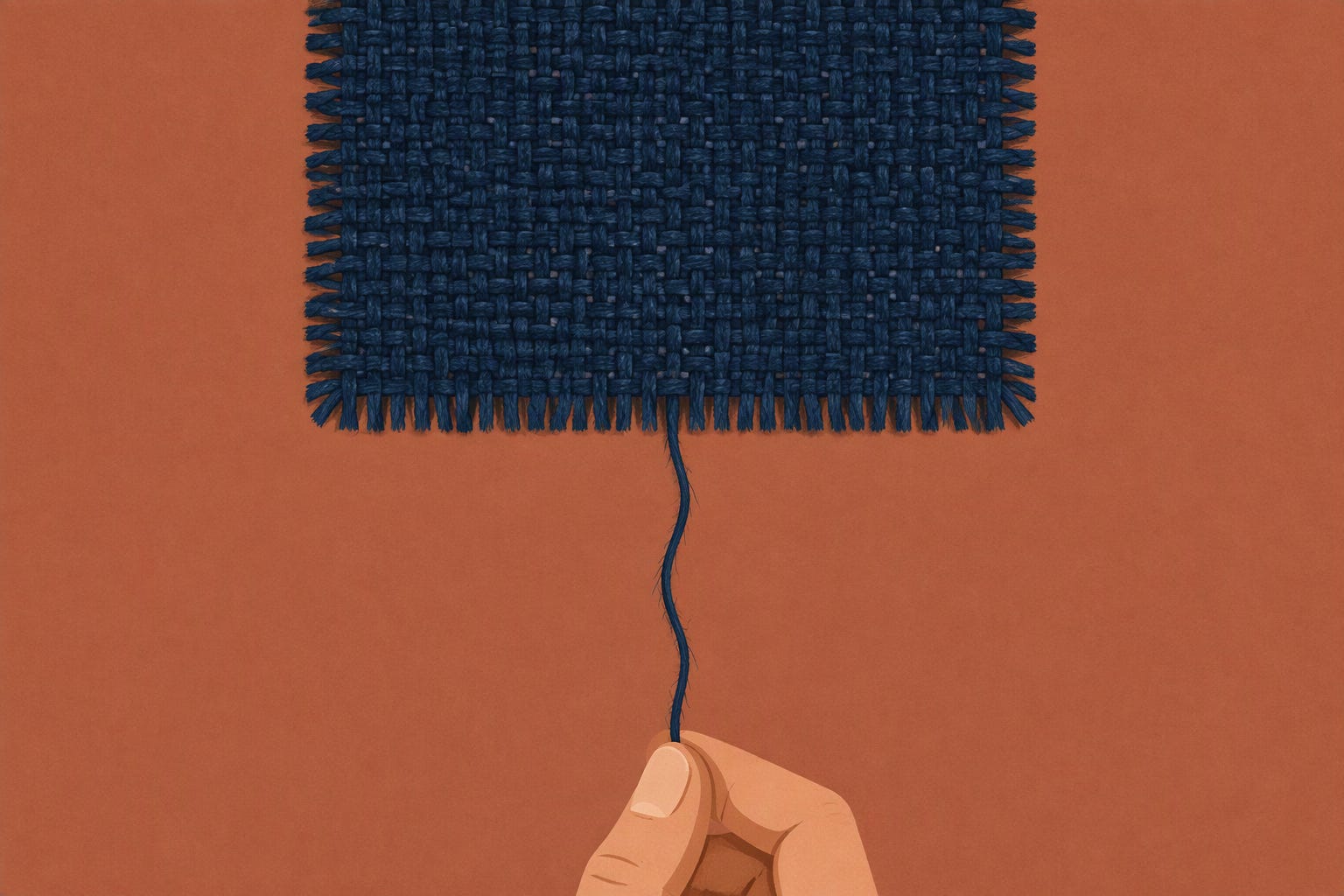
Looking in the mirror
For a long time, I assumed my beliefs were mine because I held them for so long, or I was taught them by spiritual, committed people I admired, or they were presented with a Bible-based justification. It turns out, however, I had received a lot of it sincerely and without challenge and was just not invited to more closely look at it.
So here are a few questions worth writing down:
Which of your beliefs have you never really examined?
Which ones would scare you to examine, and why does it scare you?
What questions about your inherited or taught faith do you really wonder about or would like to have a heart-to-heart with God about one day?
What parts of that same faith seem inconsistent with other parts of what you believe about God, so you wonder how to reconcile them?
You can’t own a faith you’ve never been allowed to inspect.
A word to the skeptic
If you’ve been reading this with your arms crossed, I get it. You’ve watched people “deconstruct” right out of the church door, and you’ve grieved some of them. But people don’t wrestle with things they’ve already let go of. Most of the questioners in your church are holding on harder than you think.
Let people ask questions. View it as an invitation to help and not a threat to their faith, your faith or the church’s standing.
Next week - Part 2
Deconstruction has a cost and its share of challenges, and I’d be lying if I told you otherwise. Part 2 of this series is about that hard road: what people will say and think, what it feels like to give up certainty, the loneliness nobody warns you about, and what actually helps you keep walking.
Please come back for that discussion too.
For Further Reflection
If you’ve never questioned what you believe, how do you know it’s yours? What questions do you have about your faith that you’d like to ask God but are afraid to admit out loud?
Source: Barna Group, “Ex-Christians Aren’t the Only Ones Deconstructing Faith,” October 2024, http://www.barna.com/trends/ex-christians-deconstructing/
Other Recommended Resources on Faithful Deconstruction:
This is so good! "Deconstruction" - questioning what we believe and know, should really be a common, regular part of our faith. Your comment of Jesus calling people to do this ("you've heard it said...but I tell you") is indicative of this ongoing need. It doesn't have to be critical, certainly not mean-spirited, but a healthy asking of "why do I believe what I believe?"
Thank you, Harvey. I am currently in the middle of my own deconstruction. Your essay was powerful.